
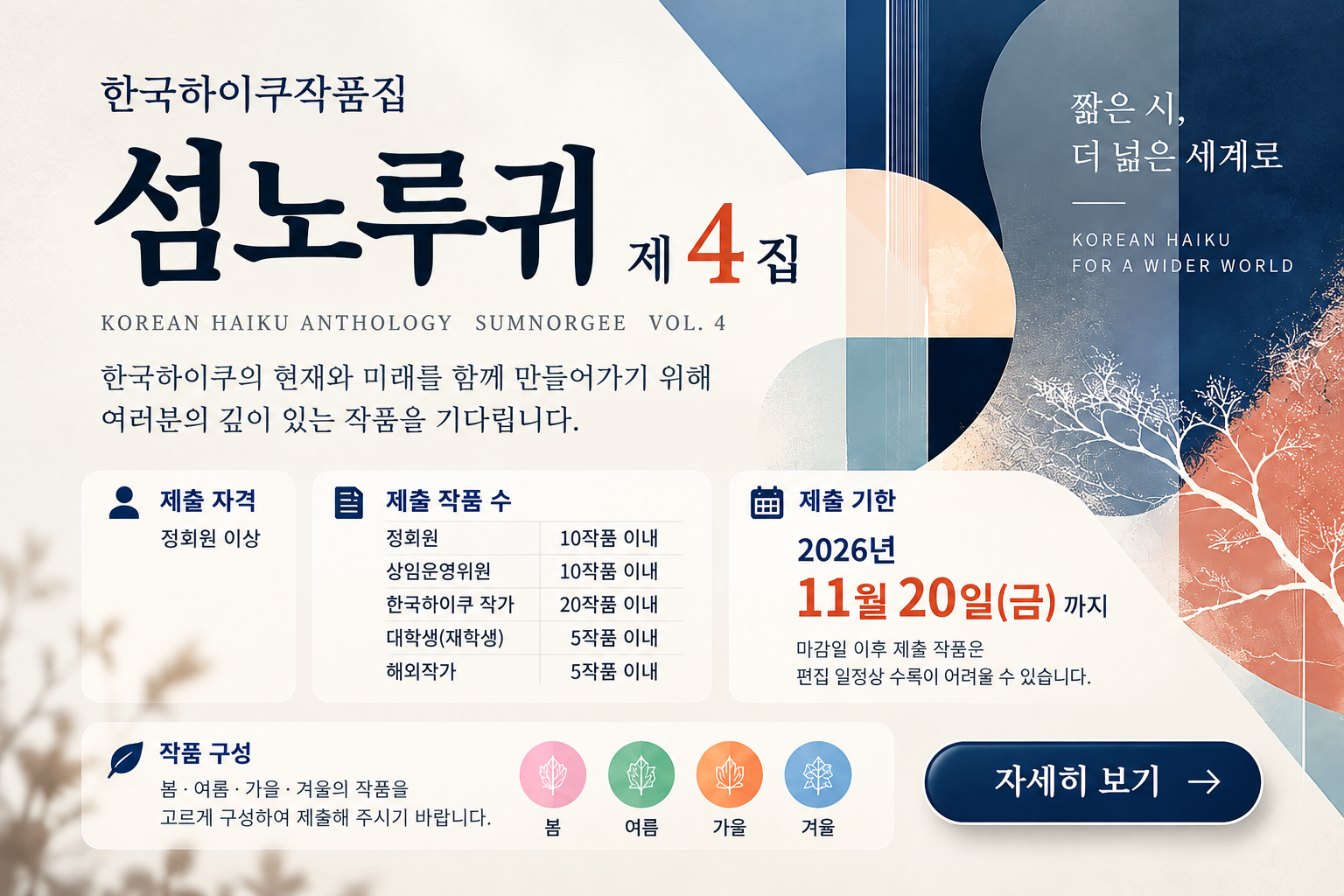
섬노루귀 제4집 작품 모집 안내
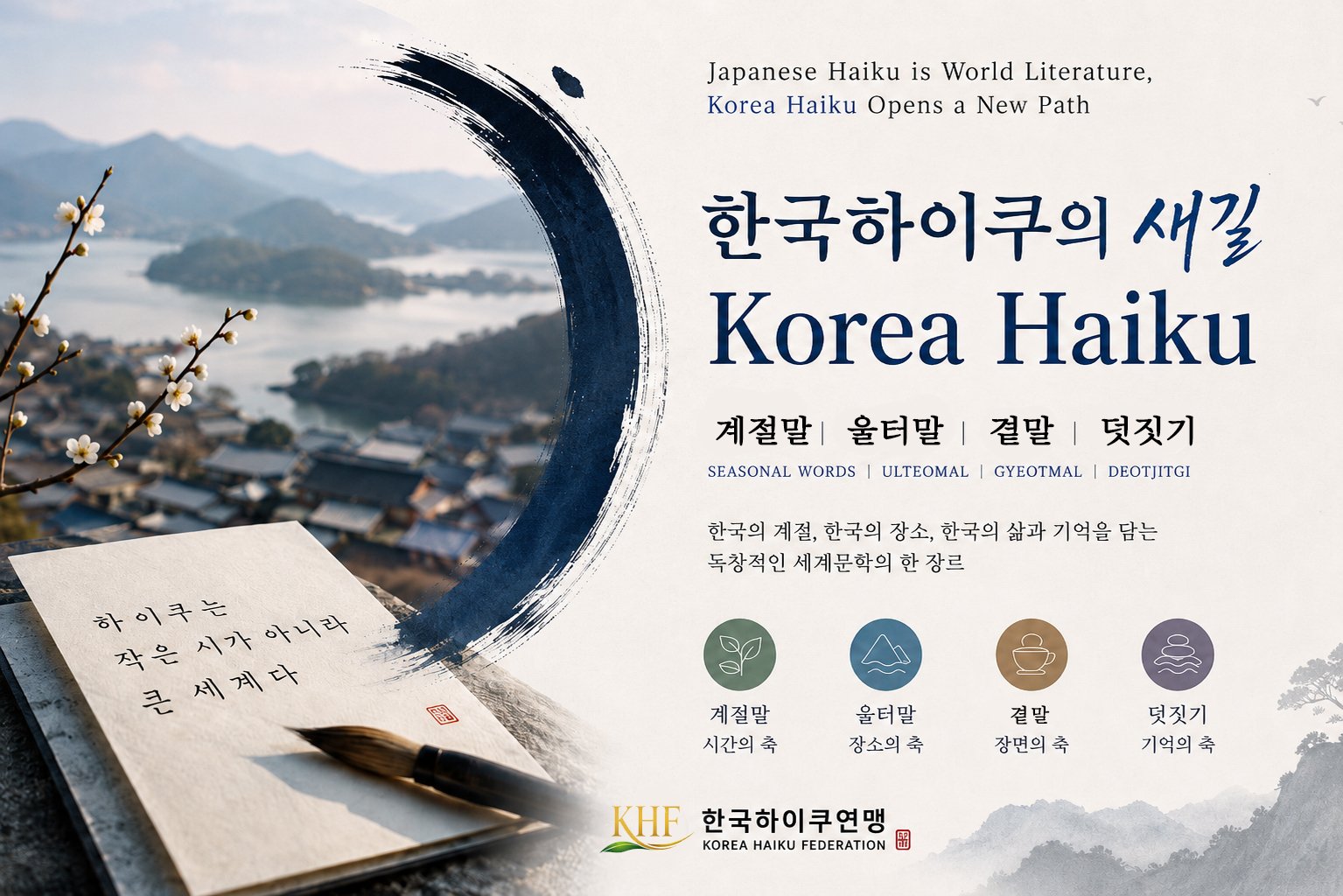
Japanese haiku is already world literature. Although haiku began as a short fixed-form poem in Japan, it no longer remains confined within the Japanese language. Through the hokku tradition of the Edo period, the aesthetics of Bashō and Buson, and the modern reforms of Masaoka Shiki in the Meiji era, haiku became one of the central genres of Japanese literature. Shiki, in particular, played a decisive role in developing the modern forms of haiku and tanka, placing great emphasis on the attitude of shasei—the direct sketching of life and observed scenes. In the twentieth century, haiku spread into Western literature through translation and international exchange. The Imagist movement paid close attention to Japanese haiku, along with French Symbolist free verse, and rediscovered the power of brief language, vivid images, and the direct presentation of things. In this process, haiku no longer remained a traditional poetic form internal to Japan. It became a compact literary form through which many languages of the world could express their own sensations. Today, the globalization of haiku can also be seen at the institutional level. The Haiku International Association was founded in December 1989 in response to the worldwide popularity of haiku and to promote exchange with haiku poets and readers outside Japan. The Haiku Society of America, founded in 1968, has also encouraged the writing and appreciation of haiku in English. These facts show that haiku is both Japanese literature and a shared form of world literature. Now Korea Haiku must raise a new question within this current of world literature. Korea Haiku must not be a simple adaptation or imitation of Japanese haiku. At the same time, it must not lightly discard the historical form and aesthetics of haiku. What matters is to respect the vessel of haiku while filling it with the rhythm of the Korean language, the seasons of Korea, scenes of Korean life, and a Korean sense of place. It is precisely at this point that Korea Haiku can compete as an independent genre. The originality of Korea Haiku can be explained through four core concepts: seasonal words, ulteomal, gyeotmal, and deotjitgi. These four elements show that Korea Ha…
Please log in to read the full article.
Log In