You can write and submit journal manuscripts.
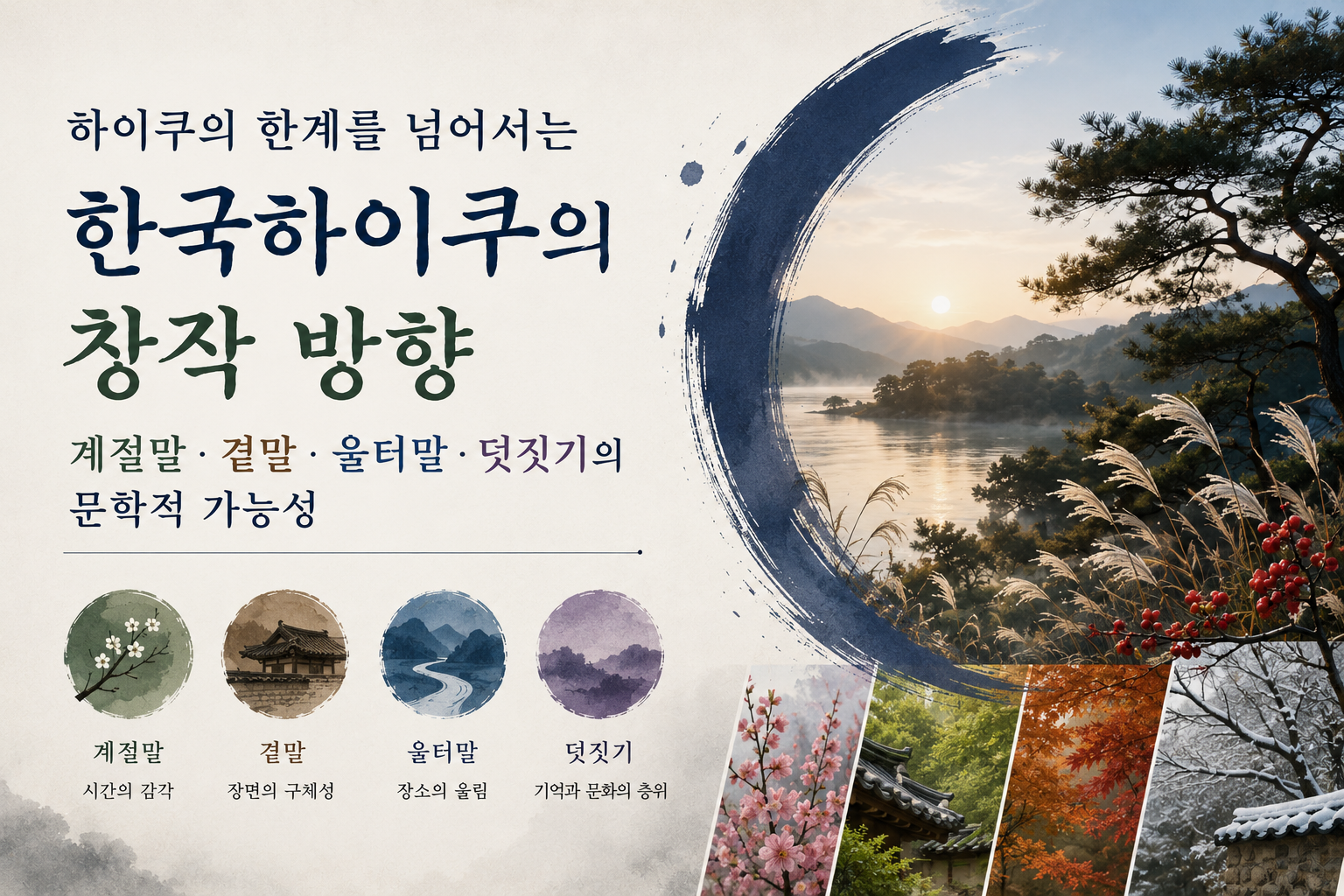
Haiku is one of the shortest yet most expansive poetic forms in the world. Its brief 5-7-5 structure, its seasonal word, and its restrained expression that captures a single moment have made haiku one of the representative genres of Japanese literature. Today, haiku has also established itself as a form of world literature, written in many languages across the globe. Yet precisely because of its …
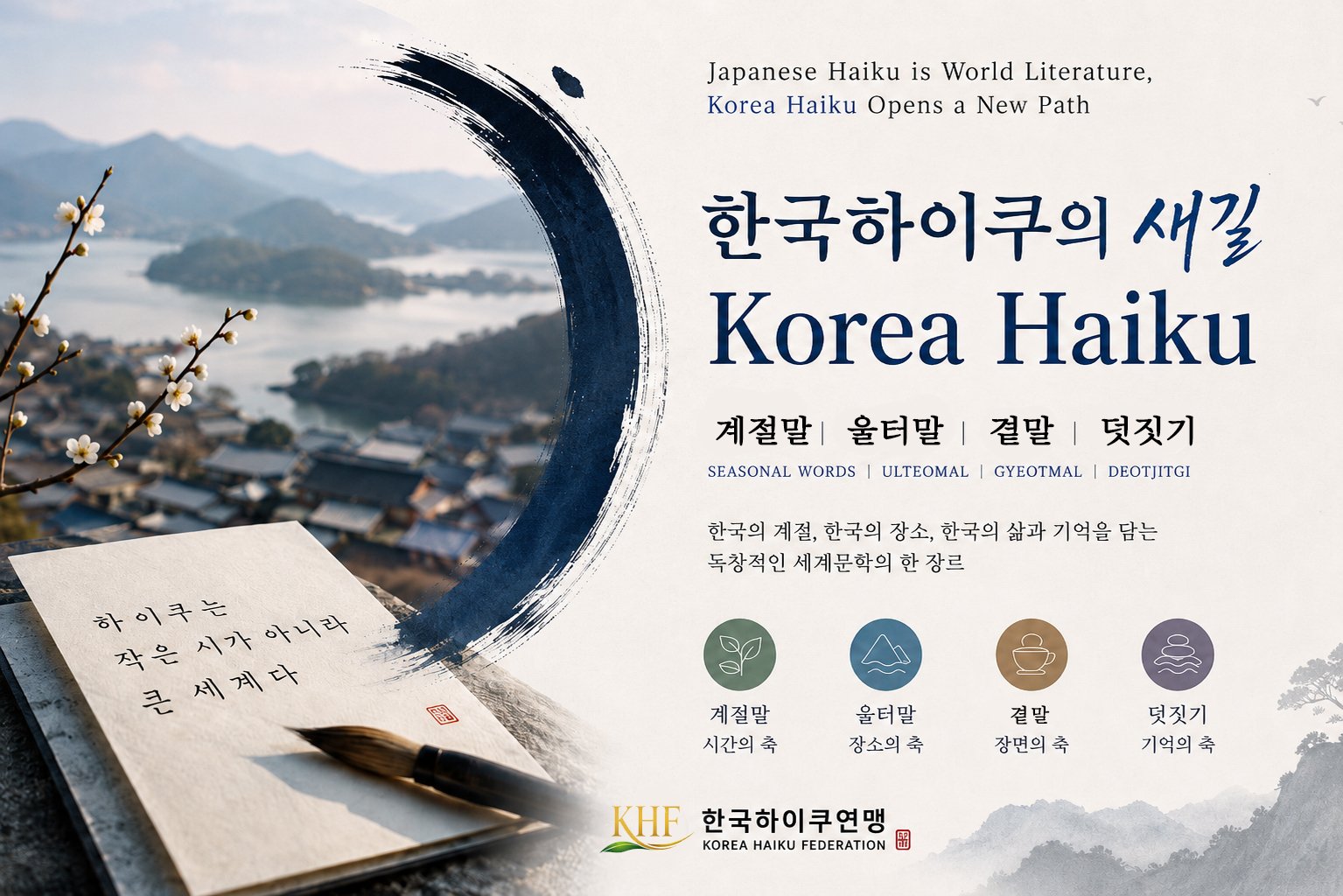
Japanese haiku has already moved beyond the boundaries of Japanese literature and established itself as a form of world literature. In this context, Korea Haiku must no longer remain a simple imitation or adaptation of Japanese haiku. Instead, it should develop as an independent literary genre that embodies the rhythm of the Korean language, the seasons of Korea, a Korean sense of place, and scene…
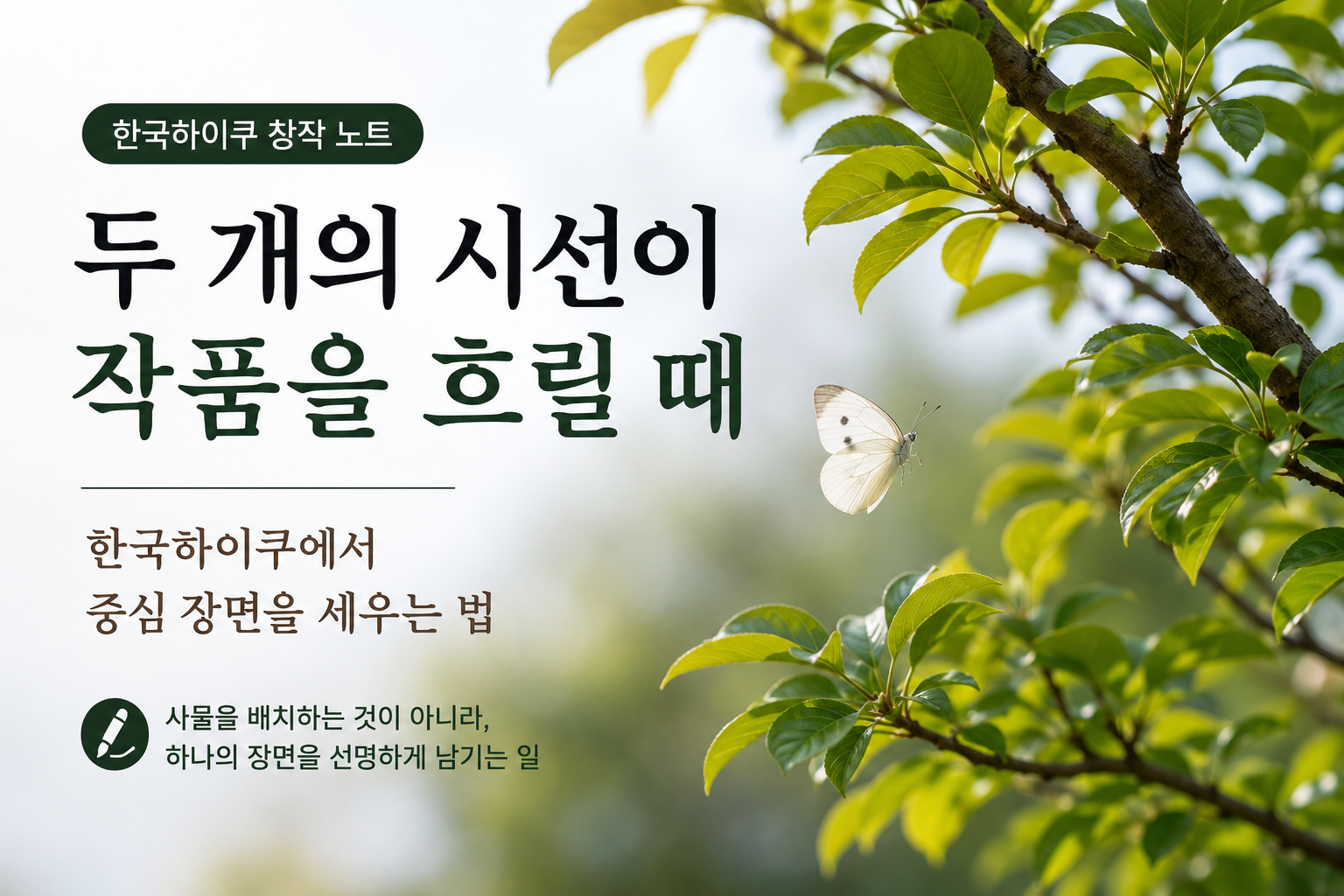
When two objects are placed at the center of a Korea Haiku at the same time, the reader’s gaze can easily become scattered. What matters is not placing many things in the poem, but clarifying the relationship between center and background so that one clear scene remains. When a poem shows a scene rather than explains an emotion, the openness of Korea Haiku becomes deeper.
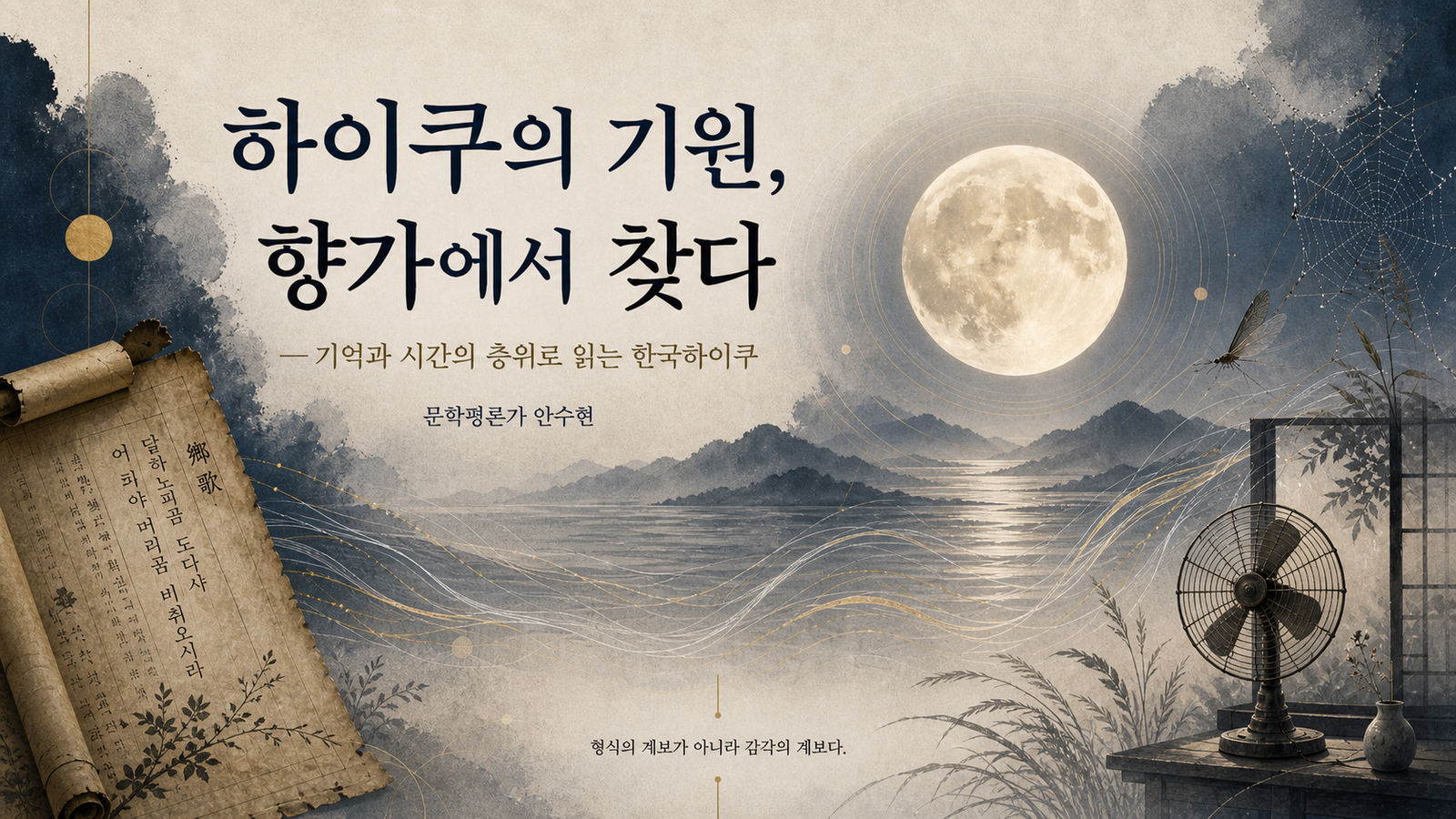
Tracing the Origins of Haiku in Hyangga— Korea Haiku Read Through the Layers of Memory and Time An, Soo-hyun(Literary Critic) Discussions surrounding the origins of haiku have long been situated within the internal genealogy of Japanese literature. The progression from waka to renga, then to haikai, and finally to haiku, has generally been understood as a relatively stable tradition (Earl Miner, J…
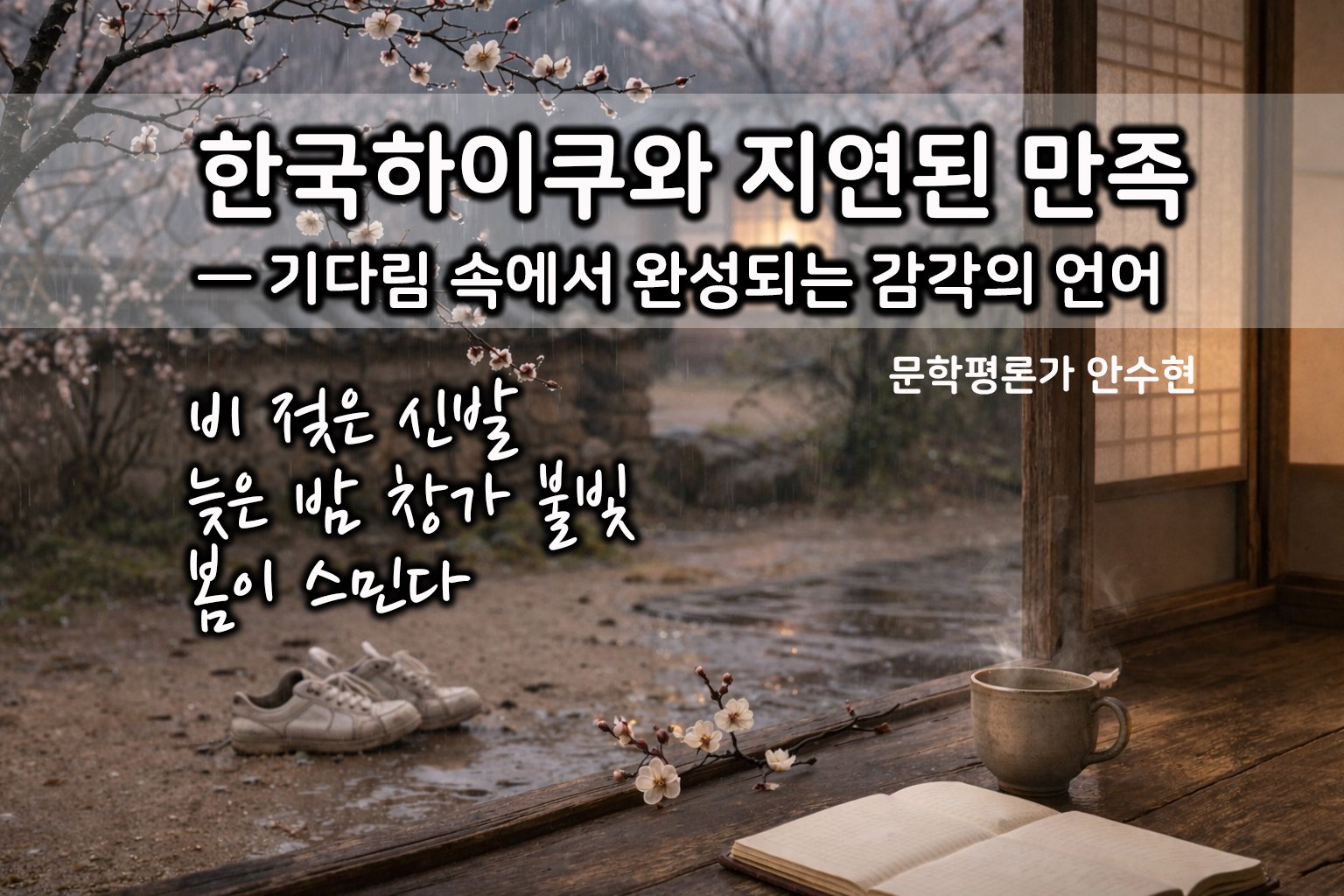
Korea Haiku and Delayed Gratification explores Korea Haiku as a poetic form completed through waiting and delayed perception. By embracing silence, seasonal awareness, and restrained emotions, Korea Haiku allows meaning to unfold slowly over time. It reveals that true poetic experience is found not in immediate satisfaction, but in the depth created through waiting.
Korea Haiku does not promise grand enlightenment. It simply allows us to feel one moment fully and properly. And as those moments accumulate, the texture of life begins to change. Just as mindfulness changes the way we live, haiku quietly, yet unmistakably, readjusts our senses. Today’s Korea Haiku is poetry, and at the same time a practice of daily life; it may be called a small form of zazen mad…
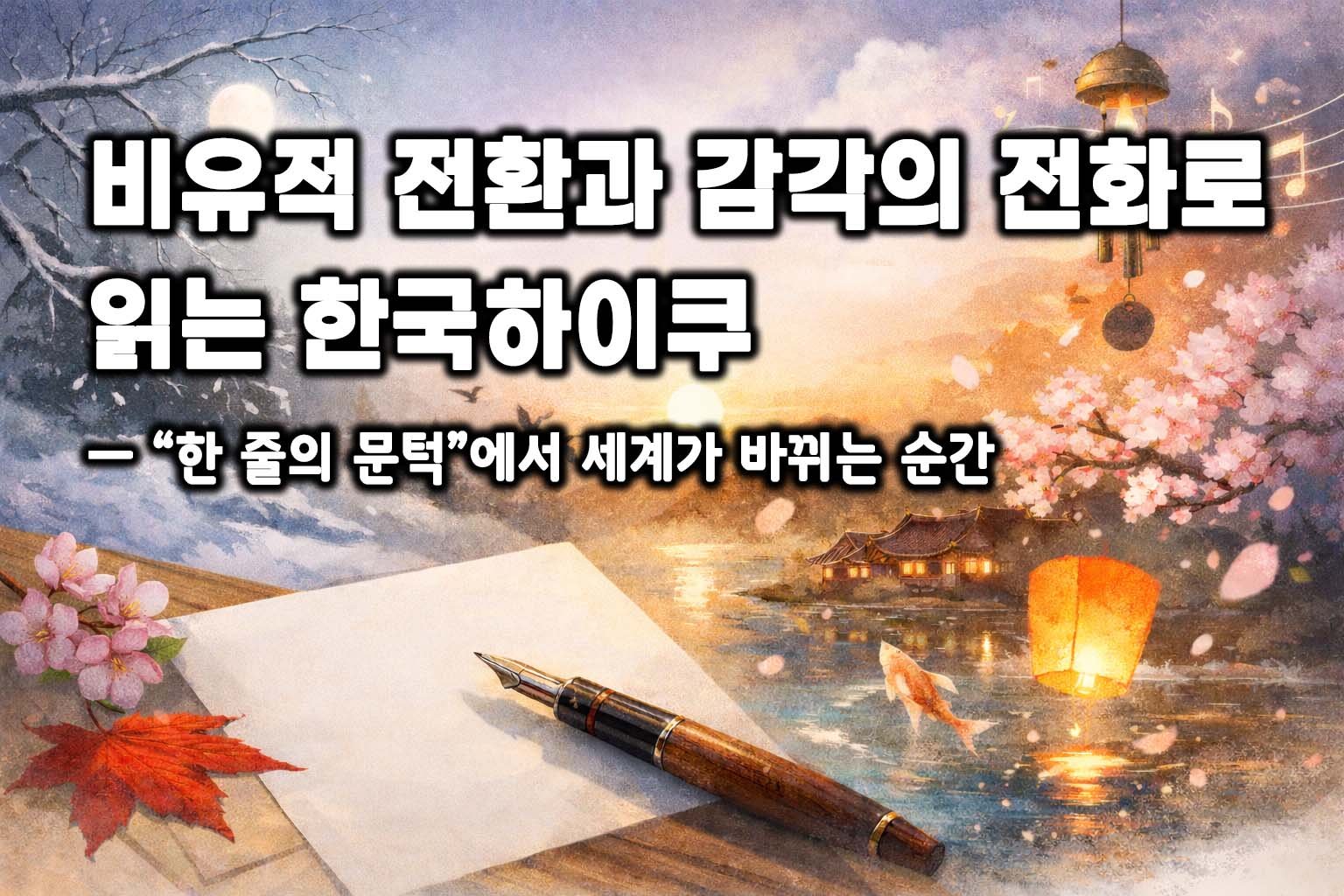
Metaphorical transformation is not a technique for “saying the world differently,” but a technique for making the world be felt differently. The transmutation of the senses is the engine of that technique, and Korea Haiku is a form that carries this engine in the smallest possible vehicle. At the moment when the stillness of winter is transformed into a threshold, when blank space is read as possi…

Korea Haiku gains deeper resonance when it presents a scene through objective observation of phenomena, rather than placing interpretation or emotion at the forefront. Season words serve as coordinates that fix the time of the scene, and the more unnecessary explanation and metaphor are reduced, the more actively the reader completes the meaning. In particular, an ending that stops with a noun rat…

There is no reason for the humanities to shrink in the age of AI. On the contrary, an attitude that avoids AI tools may leave the humanities behind the times. What matters is not whether AI is used, but how it is used. As AI has made text production easier, the weight of interpretation, judgment, and responsibility in discerning what is valid has become even greater. This makes the core role of th…
Receive the latest haiku-related news by email.
