
영문명(English Name) 등록 안내
국제 소통을 위해 회원정보에 영문명을 입력해 주세요.
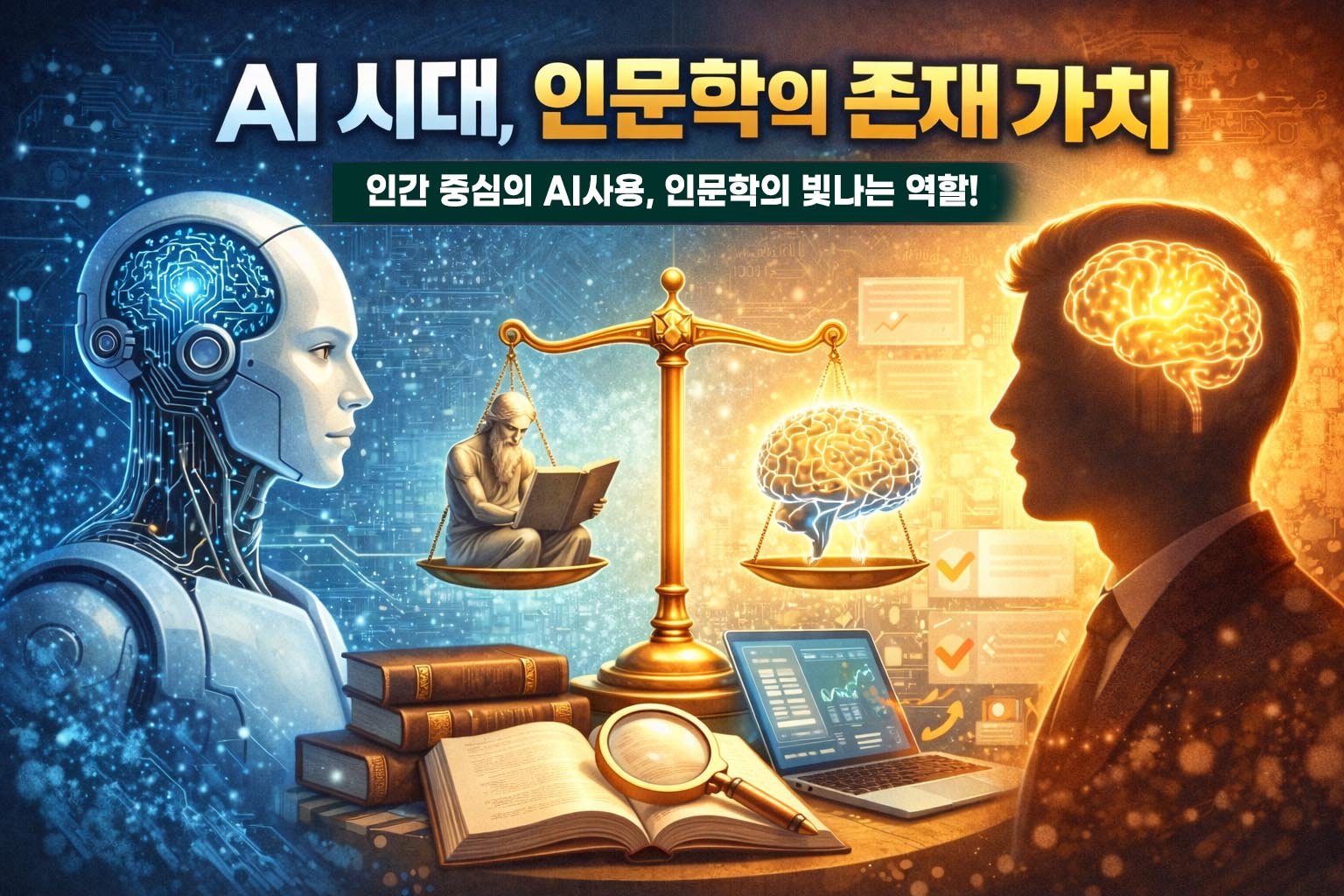
Not “Humanities That Avoid AI,” but “Humanities That Tame AI”Cultural Critic Kim Soo-sungWe have entered an age in which AI writes, summarizes, translates, and even generates images and voices. People now ask whether the place of the humanities is shrinking. Are the roles of reading and writing, interpretation and judgment—roles that human beings have long held—being replaced by machines? Yet this question should be asked in a slightly different way. The real question is not whether the humanities will disappear in the age of AI, but what new responsibilities the humanities must take on in the age of AI.I believe that this is not an age in which the humanities are becoming weaker, but an age in which they are becoming even more necessary. The premise, however, must be clear. The place of the humanities cannot be protected merely by vaguely avoiding or rejecting AI as a tool. Avoiding tools and becoming subordinate to tools are both insufficient answers. The problem is not AI itself, but how we use it, from what perspective, and with what sense of responsibility. Therefore, the humanities we need today are not “humanities that avoid AI,” but “humanities that tame AI.”The greatest change of our time is that the threshold of production has become lower. Texts are produced quickly, summaries are provided instantly, and translations are completed within seconds. Tasks that once required considerable time and labor can now be performed with the help of automated tools. Yet the fact that production has become easier does not mean that meaning automatically becomes deeper. On the contrary, as texts multiply, what becomes more important is the ability to discern which words are trustworthy, which interpretations are responsible, and which judgments are fair.This ability cannot be fully replaced by machines. AI can generate sentences, but it does not take responsibility for the historical context from which those sentences emerge, the value judgments they contain, or whose voices they erase and whose experiences they exaggerate. The more information overflows, the heavier the burden of human interpretation and judgment becomes. The role of the humanities grows precisely at this point. The humanities are not simply disciplines that produce information. They are disciplines that deal with meaning, context, value, and responsibility. Therefore, the humanities in the age of AI should not compete with the speed of information production, but should reestablish themselves by asking what such information means.In this sense, AI is …
Please log in to read the full article.
Log In