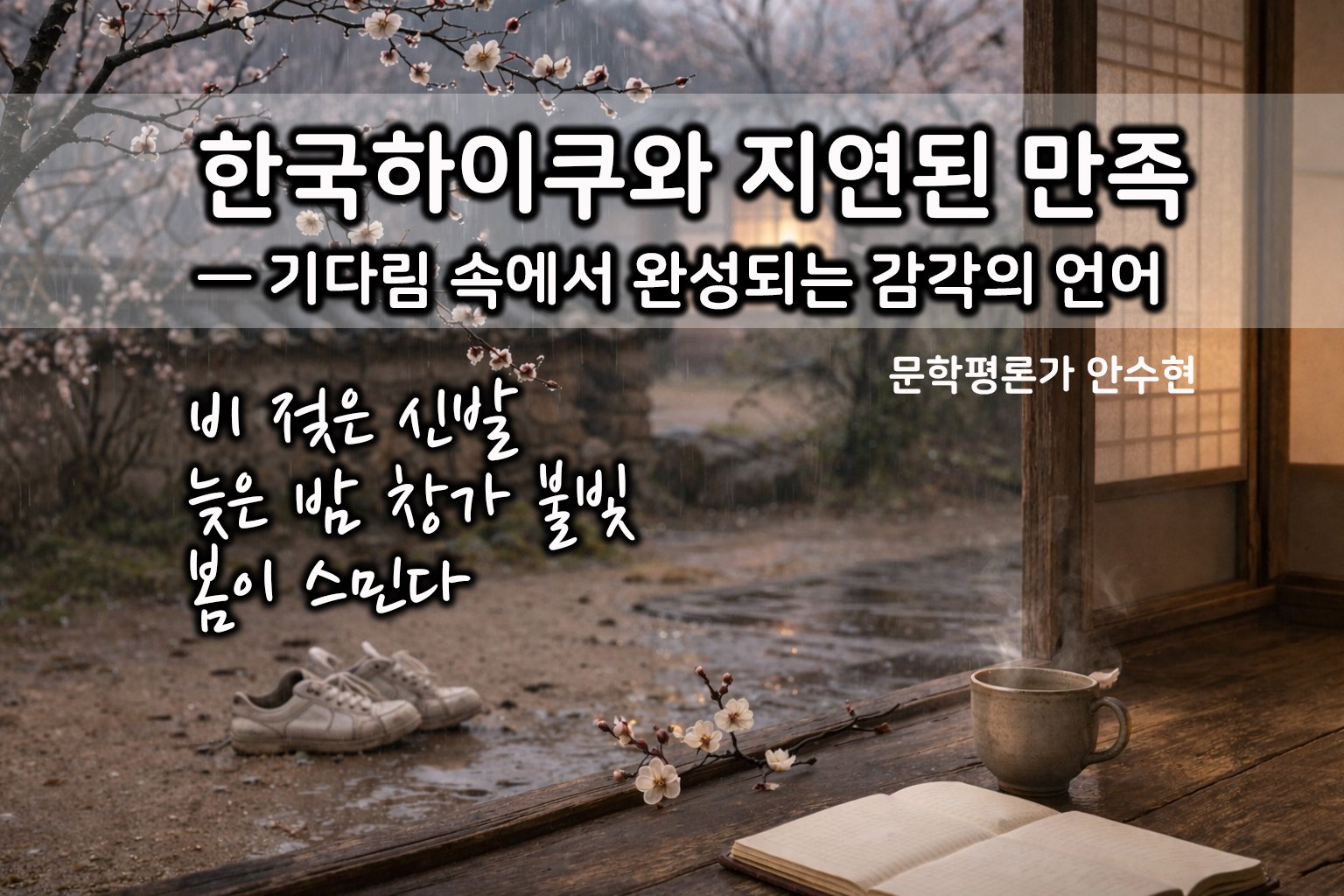
You can write and submit journal manuscripts.
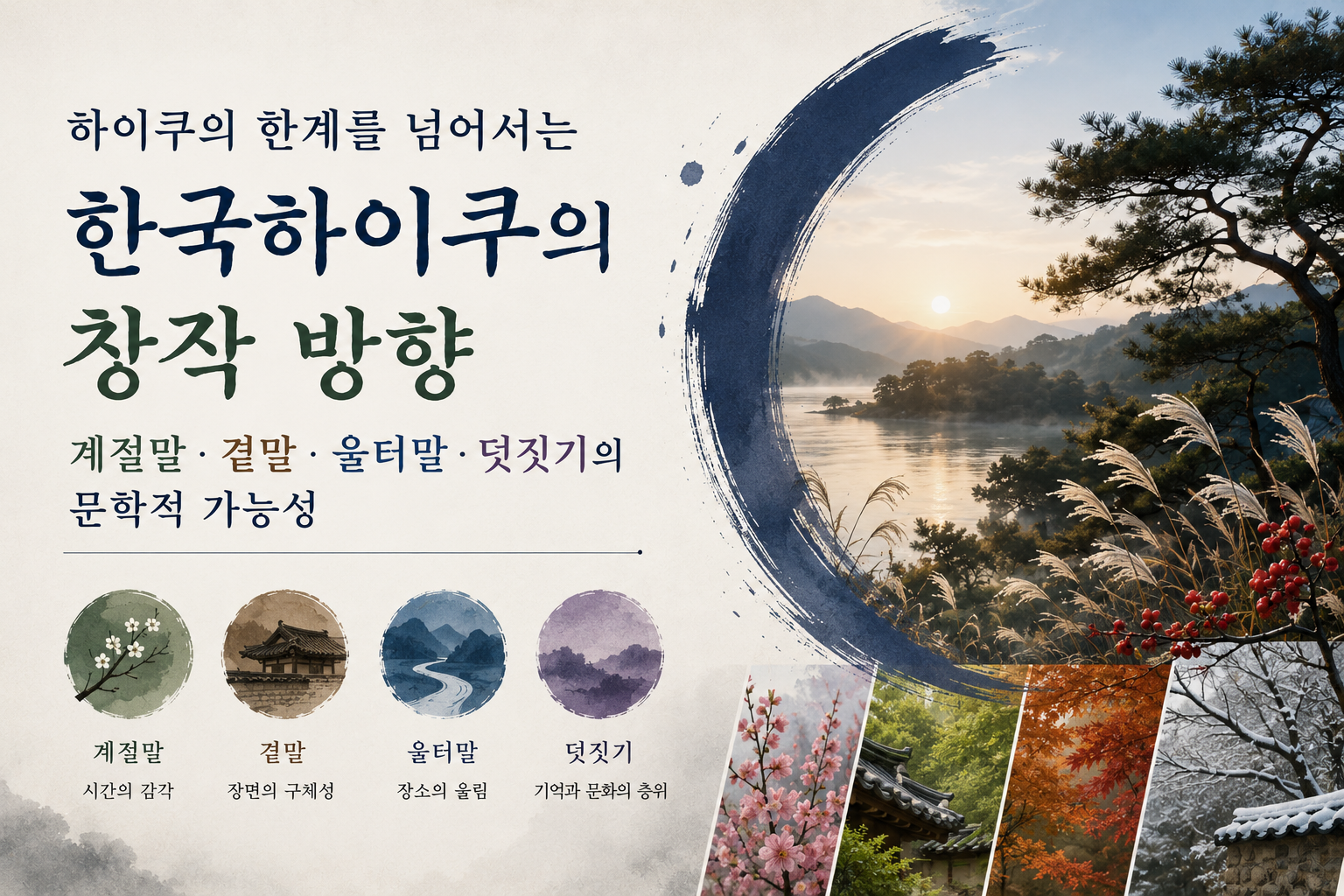
Haiku is one of the shortest yet most expansive poetic forms in the world. Its brief 5-7-5 structure, its seasonal word, and its restrained expression that captures a single moment have made haiku one of the representative genres of Japanese literature. Today, haiku has also established itself as a form of world literature, written in many languages across the globe. Yet precisely because of its …
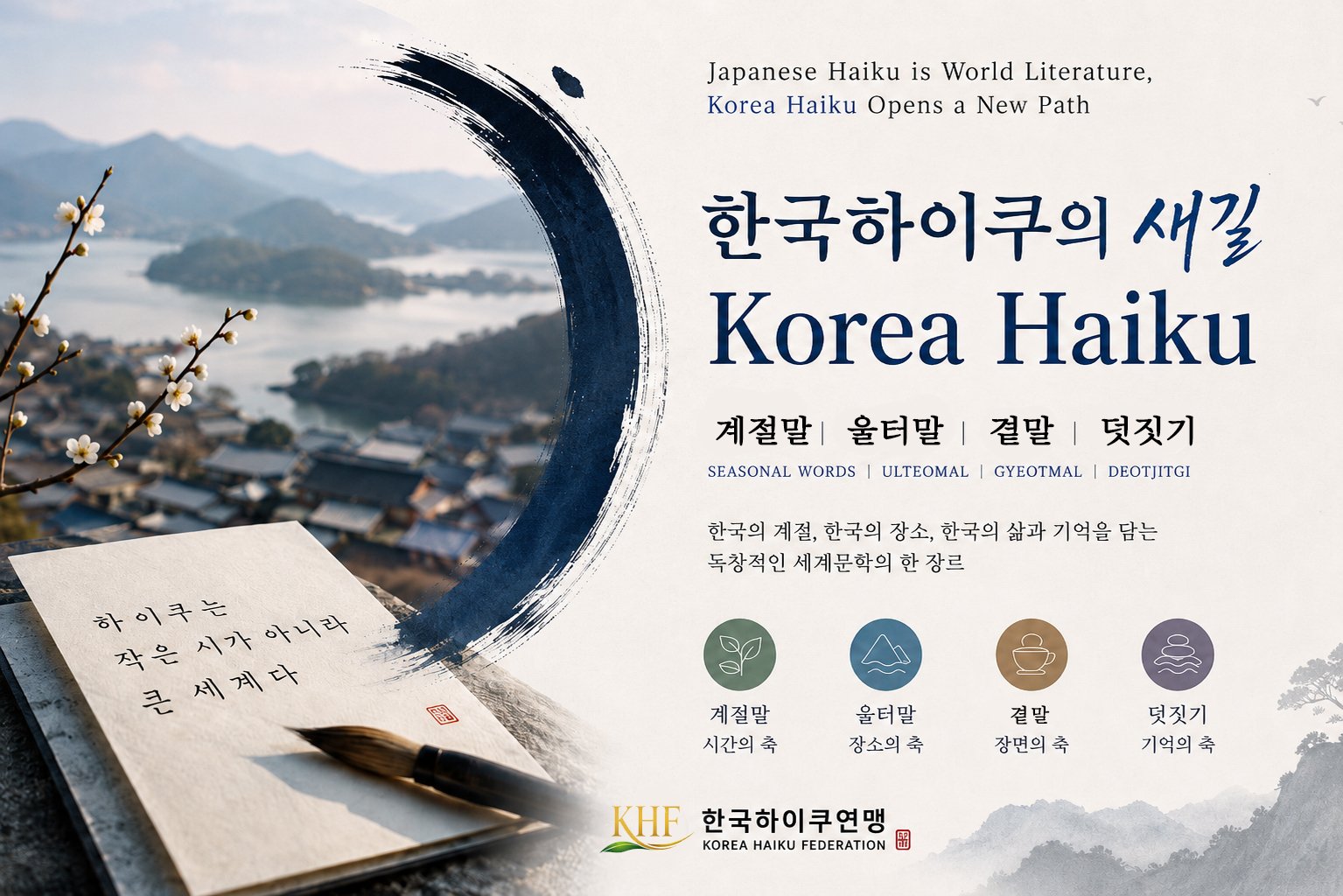
Japanese haiku has already moved beyond the boundaries of Japanese literature and established itself as a form of world literature. In this context, Korea Haiku must no longer remain a simple imitation or adaptation of Japanese haiku. Instead, it should develop as an independent literary genre that embodies the rhythm of the Korean language, the seasons of Korea, a Korean sense of place, and scene…
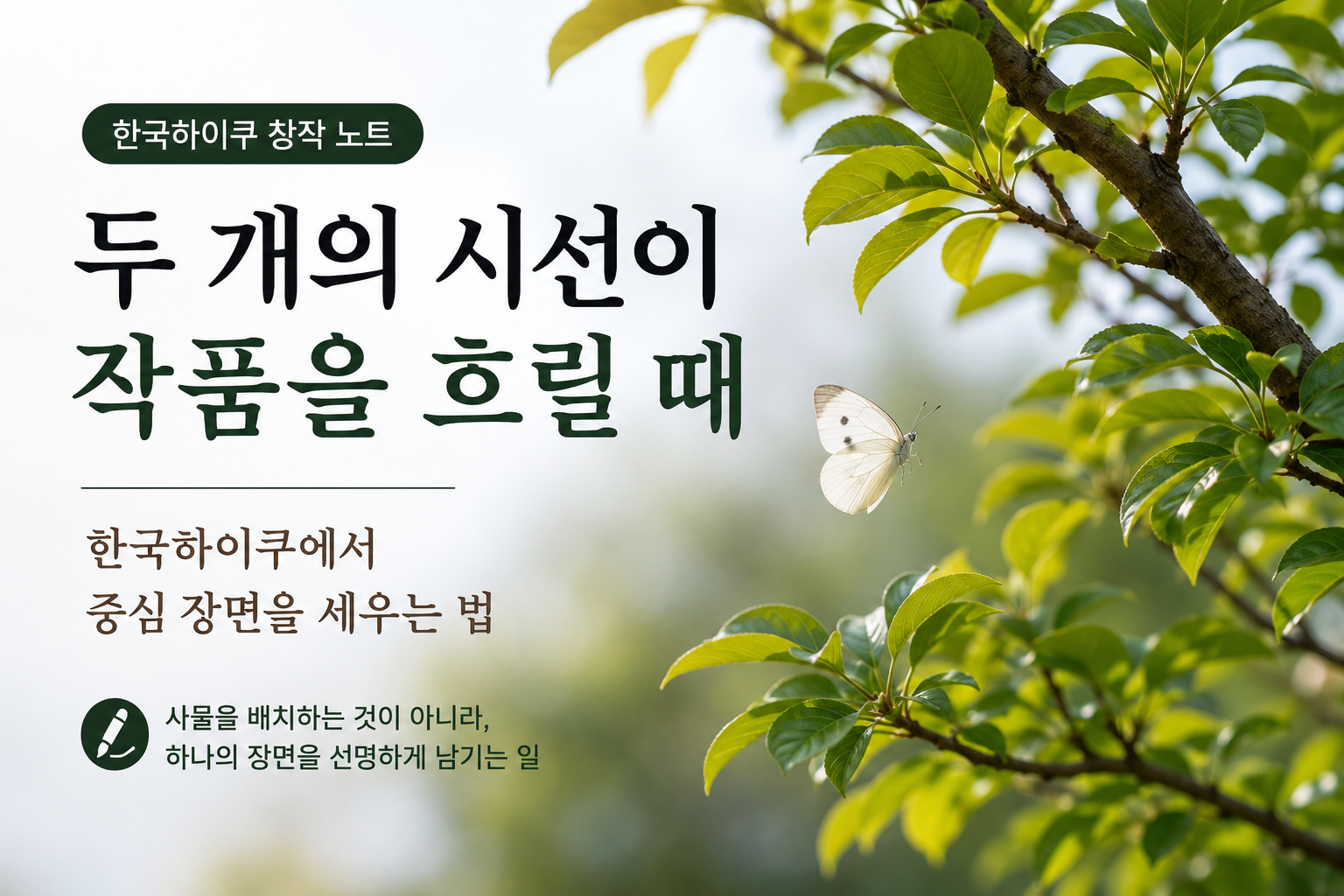
When two objects are placed at the center of a Korea Haiku at the same time, the reader’s gaze can easily become scattered. What matters is not placing many things in the poem, but clarifying the relationship between center and background so that one clear scene remains. When a poem shows a scene rather than explains an emotion, the openness of Korea Haiku becomes deeper.
Korea Haiku does not promise grand enlightenment. It simply allows us to feel one moment fully and properly. And as those moments accumulate, the texture of life begins to change. Just as mindfulness changes the way we live, haiku quietly, yet unmistakably, readjusts our senses. Today’s Korea Haiku is poetry, and at the same time a practice of daily life; it may be called a small form of zazen mad…
Receive the latest haiku-related news by email.