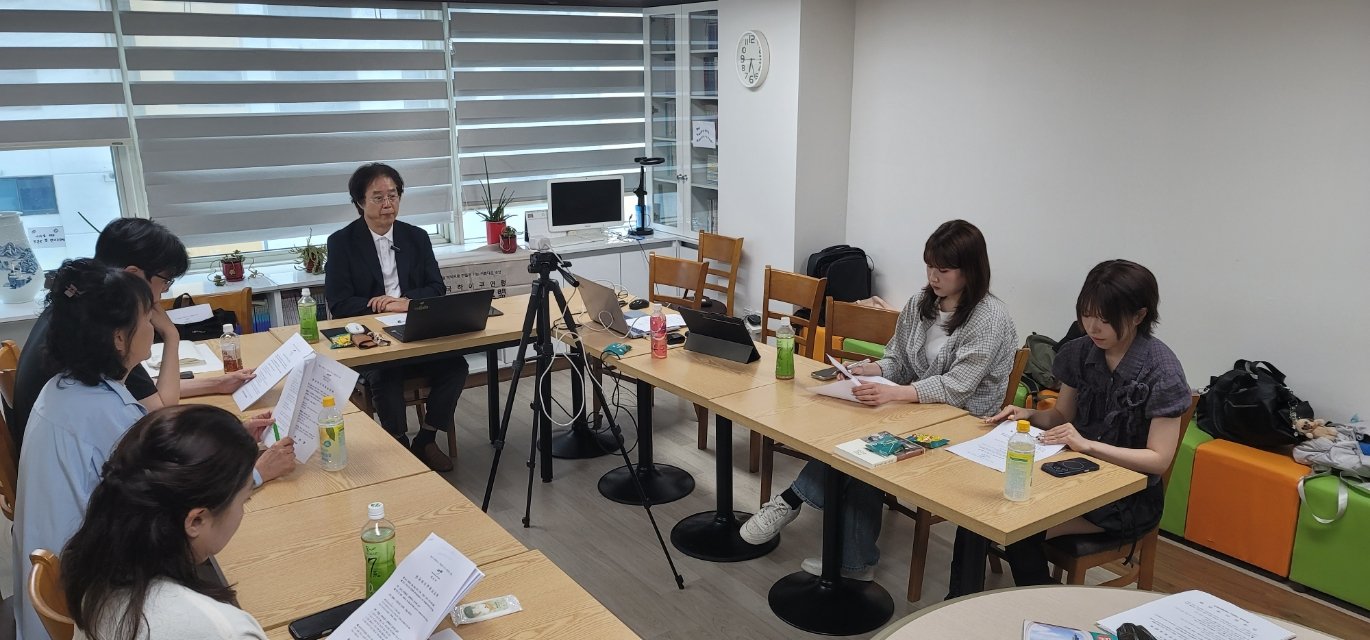
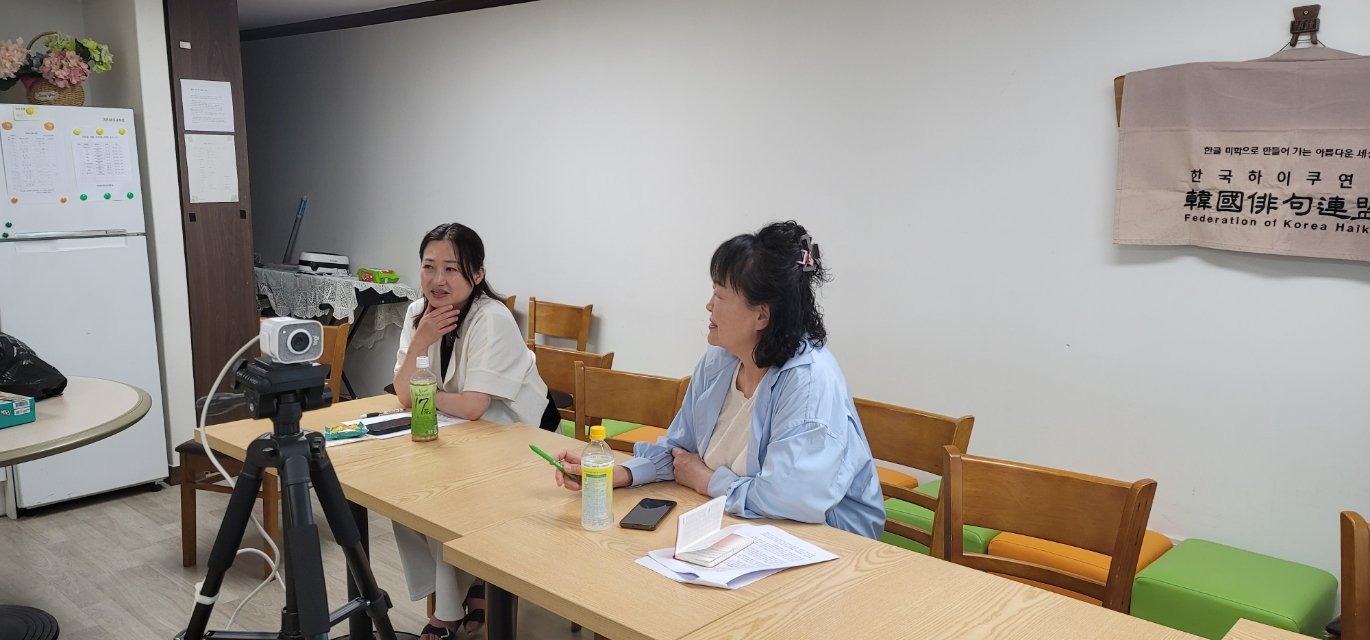
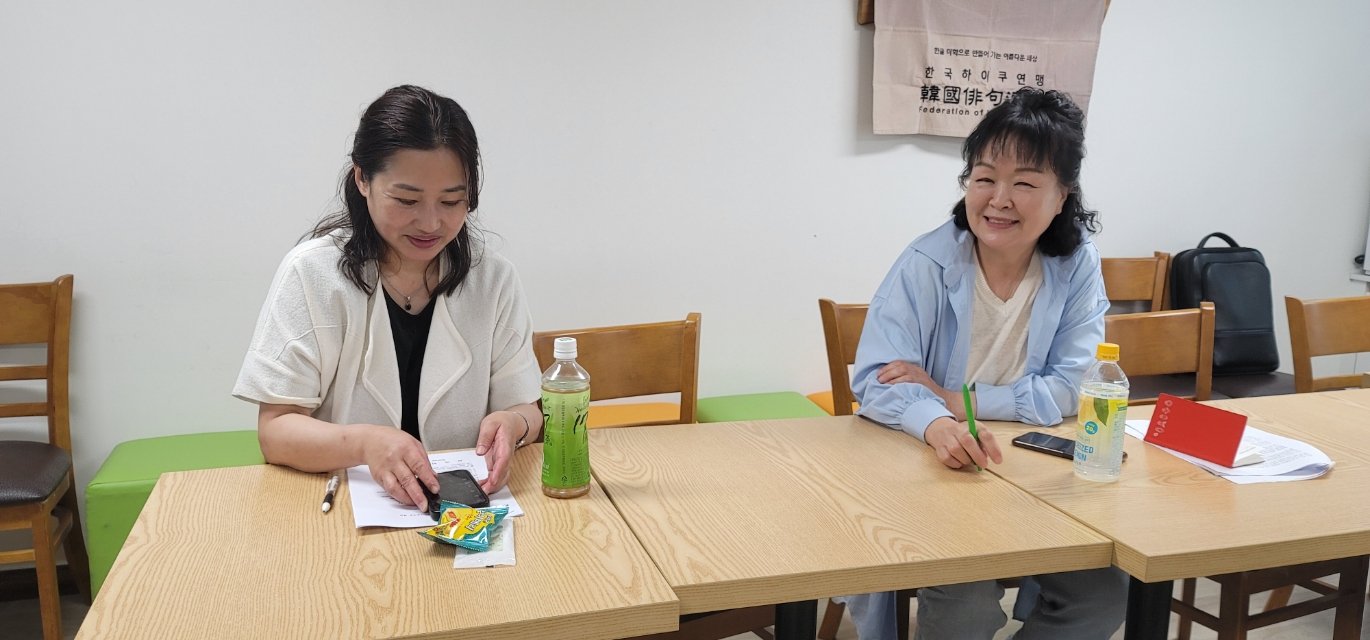
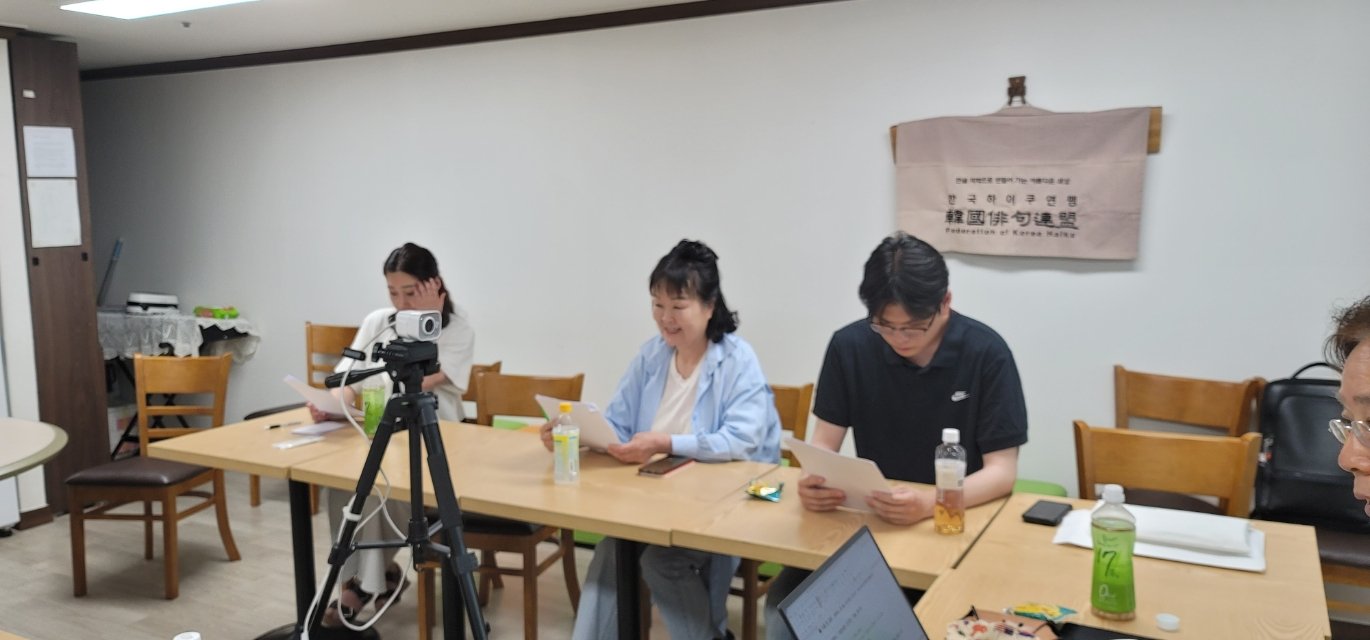
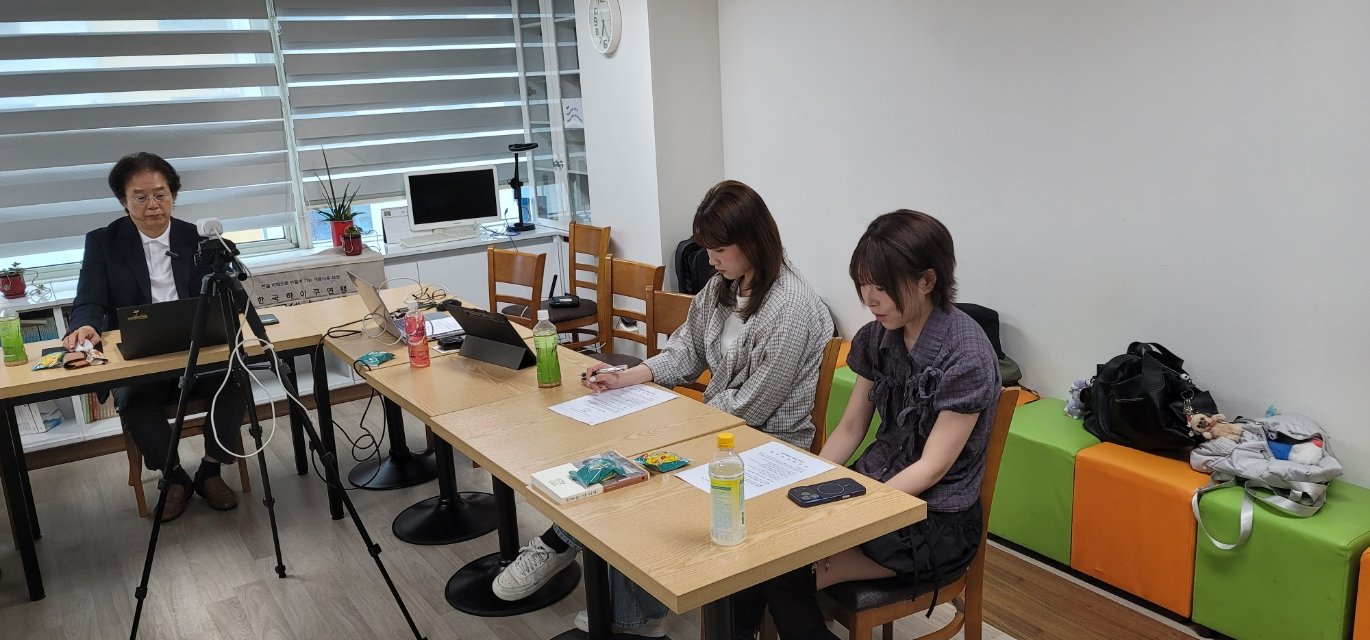
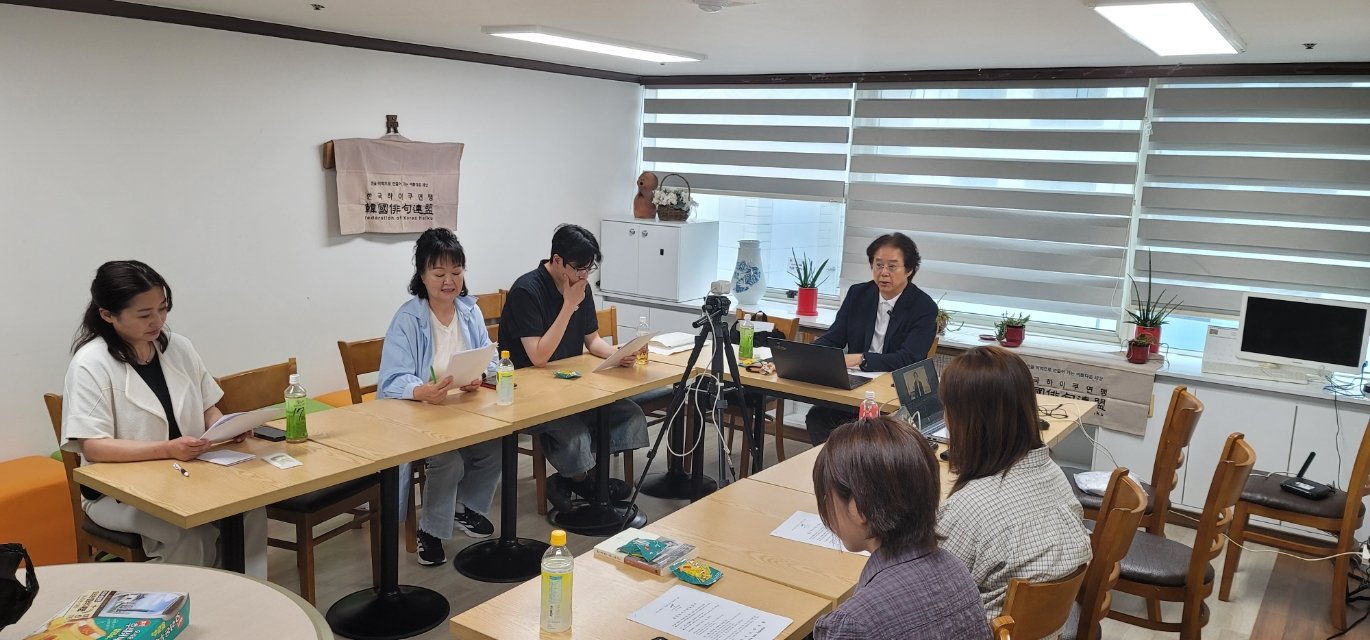
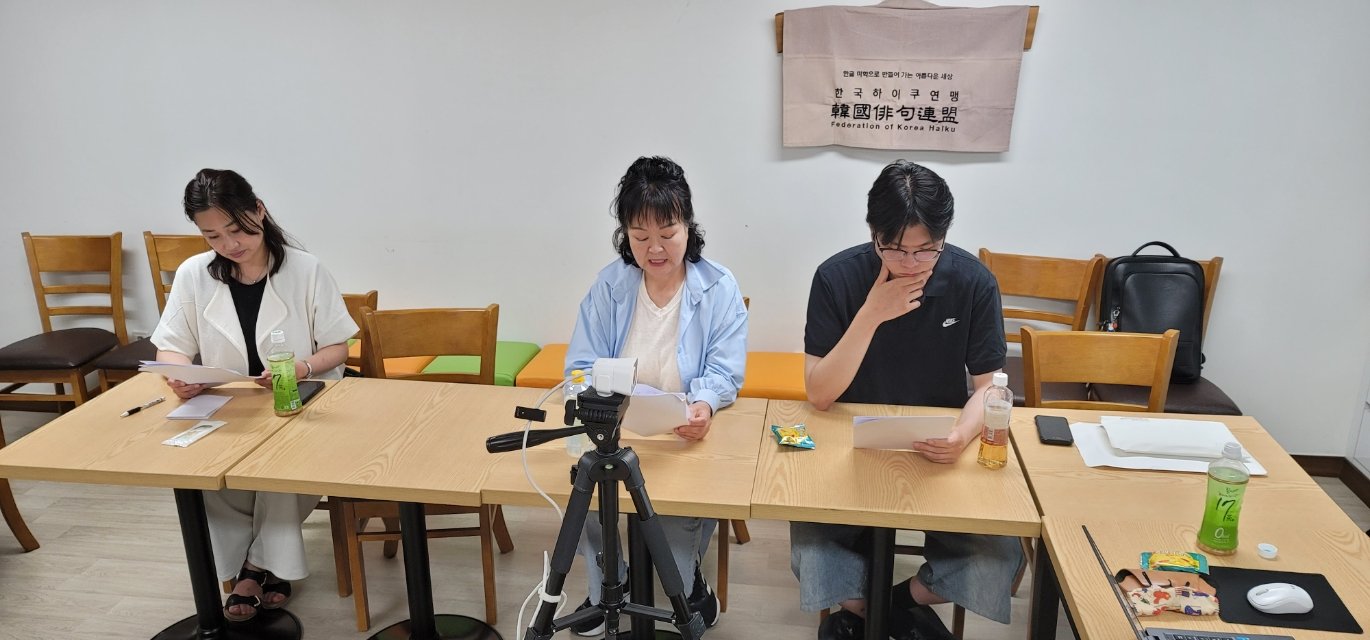
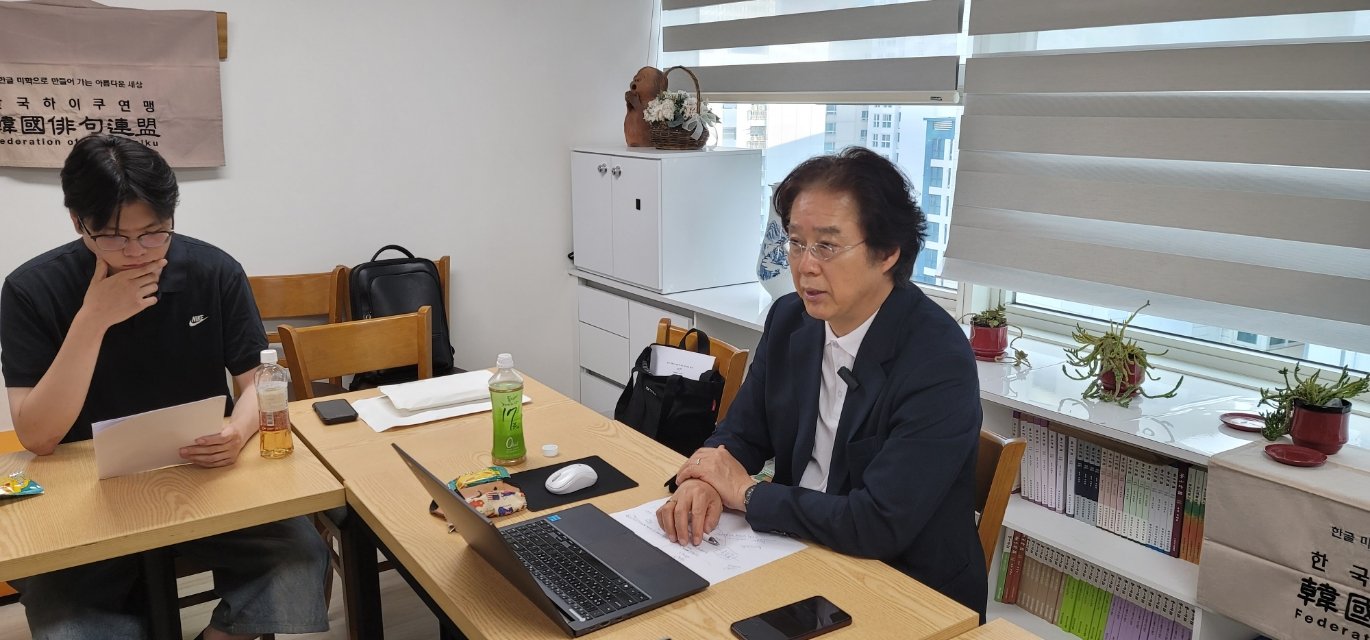
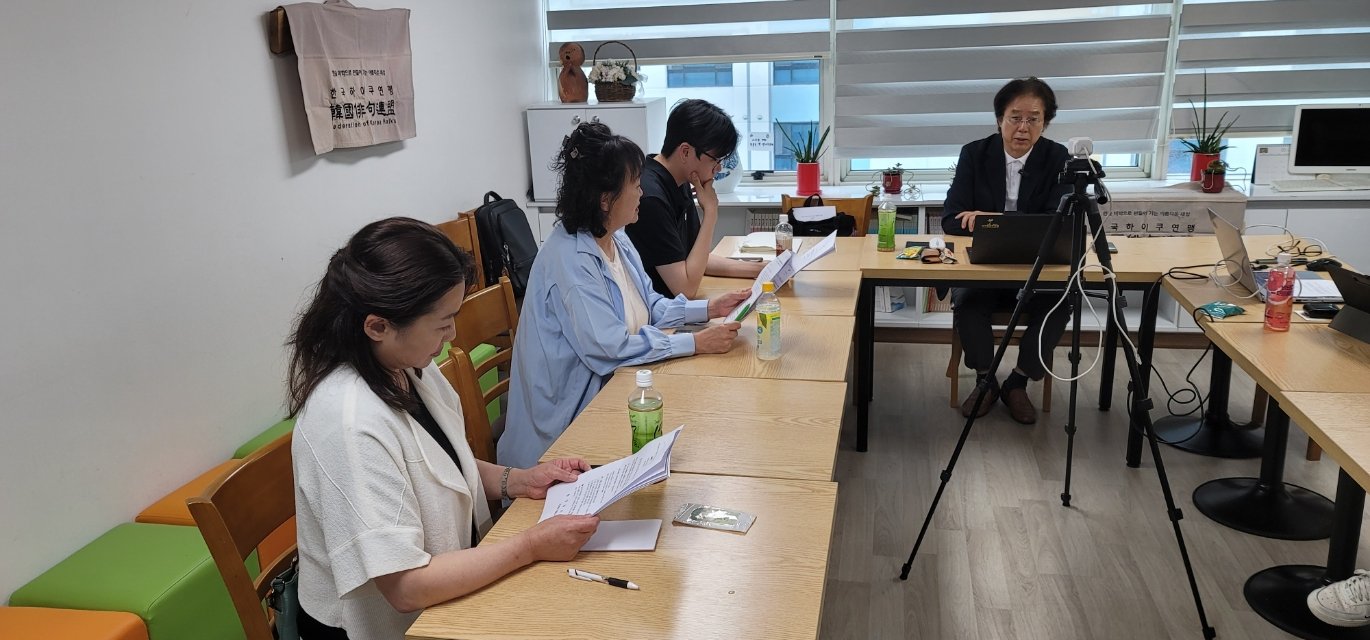
The Korea Haiku Federation held its 41st Korea Haiku Thursday Lecture from 5:00 p.m. to 7:00 p.m. on Thursday, May 28, 2026, at the conference room of the Busan Sijo Poets Association. The event was organized under the theme, “Creating a Beautiful World through the Aesthetics of Hangul,” and provided an opportunity to explore both the literary value of Korea Haiku and its potential for international development.
In the first session, Professor Ahn Soo-hyun, Doctor of Literature and Secretary-General of the Korea Haiku Federation, delivered a lecture entitled “Why the Snail Climbs the Mountain: From Speed to the Direction of Being.” Professor Ahn examined Kobayashi Issa’s haiku:
蝸牛
そろそろ登れ
富士の山
Focusing on the image of a small snail slowly climbing toward a vast mountain, the lecture explored the literary significance embedded in the poem.
The lecture emphasized that the meaning of life should not be measured solely by speed or achievement. Rather, the direction in which one is moving and the perseverance to continue along that path are of greater importance. The snail’s slow movement was interpreted not merely as a symbol of weakness or limitation, but as a distinctive way in which a living being proceeds through the world at its own pace.
The participants also appreciated the poem through the Korean rendering, “Little snail, take your time climbing, toward the summit of the sky,” and reconsidered the original poem’s encouragement and respect for life through the emotional resonance and rhythm of the Korean language.
The second session was moderated by Professor Kim Soo-sung, Doctor of Literature and Executive Director of the Korea Haiku Federation. Discussions focused on expanding youth participation and promoting the international development of Korea Haiku. The participants first reviewed the formation and operational structure of the Organizing Committee for the Korea Haiku World Youth Festival. They agreed on the need to establish a clear division of responsibilities and a phased implementation plan to ensure the successful preparation and management of the festival.
The participants then discussed educational programs and promotional strategies designed to expand Korea Haiku writing opportunities for students in Korea and abroad. They proposed developing cooperative programs with schools, universities, and youth cultural organizations, while creating an online environment through which international students could participate easily in Korea Haiku activities.
Ways of strengthening international promotion through the Korea Haiku Federation’s website were also examined. The participants emphasized the need to establish systematic multilingual services for event information, literary works, participant registration, and activity records. They also stressed that submitted works and festival materials should be preserved as digital literary assets even after the conclusion of the event.
In addition, the participants discussed expanding exchanges with overseas haiku institutions and literary organizations. Joint events, literary translation projects, and international seminars were proposed as practical means of establishing a sustainable network of international cooperation.
The 41st Korea Haiku Thursday Lecture provided an opportunity to examine the attitudes toward life and respect for living beings expressed in classical haiku, while also identifying practical tasks for transmitting Korea Haiku to future generations and expanding its international presence. The Korea Haiku Federation resolved to continue broadening the aesthetic possibilities of Hangul through haiku written in the Korean language and to contribute to the creation of a beautiful world in which nature and humanity coexist beyond differences of nationality, culture, history, and thought.
Korea Haiku Federation